It was always the position that you would put the kid who wasn't very good and the other kids knew it. "What position are you playing today?", "Err, left back", "Yeah, left back in the changing rooms!". In a football team every player has a position and with each position comes a degree of responsibility and somewhere in the annals of time it was decreed that full back was to be the haven for those deemed fit to have as little responsibility as possible. The primary objective of the fullback was to deal, as best as possible, with the opposition winger safe in the knowledge that if the winger won the battle there would at least be a covering defender ready to move in and offer support. It was the least fashionable position on the pitch, an almost apologetic afterthought to team selection once the other places had been filled.
As time has changed so has football and recent years have seen a fundamental change in the role of fullback. The Julian Dicks' have been replaced by the Daniel Alves' (not literally, unfortunately for West Ham) and modern fullbacks can play a pivotal role in a teams philosophy. This progression of the full-back role has had a lot of positive impacts in the modern game but there are also negative connotations that are there to be exploited, as this article will try to demonstrate by focusing on two recent high-profile matches.
"Tika-taka? Does it come with chips?"
F.A. Cup Semi-Final - Liverpool vs Everton
It was the most eagerly anticipated Merseyside Derby for years. Usual underdogs Everton went into the match a place above neighbours Liverpool in the Premier League and were considered by many to be favourites for the encounter. A poor run of form and lack of goals from the reds coincided with Everton's best run of the season, culminating in a 4-0 drubbing of Sunderland by an under-strength blues and the Toffees arrived at Wembley in a confident mood.
There were no great surprises in the Everton team named for the match, unlike the league meeting a few weeks previous, but there were a couple of Liverpool selections that had eyebrows raised. Firstly Daniel Agger came in at left back, preferred ahead of Jose Enrique, with Jamie Carragher retaining his place at centre back. Secondly Jordan Henderson was given the nod at right-midfield over Dirk Kuyt, a player with a great record and knack of scoring against Everton.
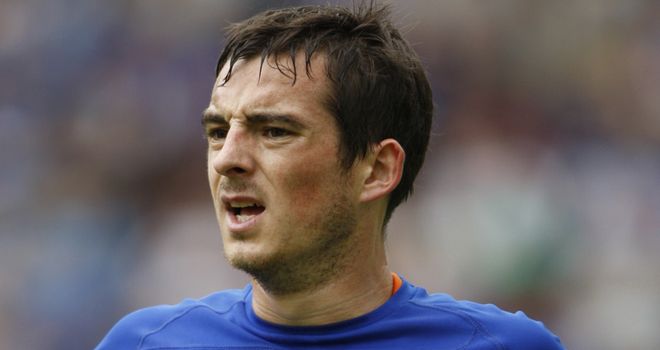
The Henderson decision was interesting as it appears to have been made with Leighton Baines in mind - Everton's left-back and arguably their best player. Baines has had a great season and can, quite rightly, claim to be one of the best in his position throughout the country. In the 'modern fullback' mould he is solid defensively whilst being dangerous going forward, acting as one of Everton's key attacking outlets.
Rather than starting the game pressing Baines (as Downing was doing on the other flank against Neville), Henderson was content holding back and inviting Baines onto him. There were two main reasons for this decision. Firstly, he didn't risk the chance of getting caught up the pitch, allowing Baines in behind him with a clear run on Glen Johnson (recently back from injury). Secondly, by inviting Baines on, Luis Suarez was able to pull out to the right channel dragging Silvan Distin with him into the space vacated by Baines. This had a direct impact on the Liverpool equaliser with Distin getting isolated by Suarez, who's pressure forced Distin into the mistake that lead to the goal. Distin is normally a strong centre-back but on a couple of occasions in this match he didn't look comfortable out of position and a couple of chances became available as a result. As the game went on Baines failed to materialise as an attacking force, eventually getting injured and being replaced late on.

"Sorry Silv..." "My bad"
Champions League Semi-Final 1st Leg - Bayern Munich vs Real Madrid
Two of Europe's biggest clubs met on Tuesday night with the chance of getting one foot into the final of the biggest club competition in football. Both came into the match on differing fortunes in their own domestic competitions. Munich had just lost away to Borussia Dortmund, effectively securing a 2nd consecutive Bundesliga for BvB. Madrid, however, were sitting pretty at the top of La Liga, 5 points clear of arch-rivals Barcelona, albeit with El Clasico on the horizon.
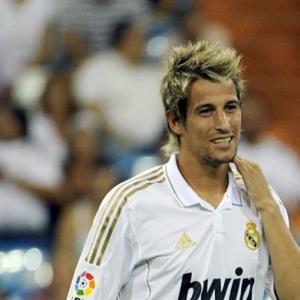
Madrid haven't done well historically in Munich but Jose Mourinho eschewed confidence coming into the game, a confidence reflected in the team sheet. Karim Benzema was preferred to Gonzalo Higuain up-top, with Angel Di Maria and Cristiano Ronaldo given free reign either side of him. Mesut Ozil was played in the hole, with Xabi Alonso and Sami Khedira acting as a buffer for the back four. Crucially at left-back, Fabio Coentrao was selected ahead of the more defensive minded Marcelo.
Madrid started with confidence in their attacking players and a deliberate tactic from the off was for Xabi Alonso to play diagonal balls towards Ronaldo in a hope to have the Portuguese put pressure on the Bayern right-back Phillip Lahm. This was a logical tactic in principle, given Lahm has spent the majority of his career on the opposite side of the back line and Ronaldo's status as one of the best attacking players in the World. However, with Bayern picking Toni Kroos over Thomas Muller they were able to flood the Madrid midfield and cut-off supply from Alonso, leaving Ronaldo an increasingly frustrated figure as the game went on. Subsequently the next step for Bayern was to in-turn put pressure on Coentrao for Madrid, safe in knowledge that, although a man of many talents, one that Ronaldo is not noted for is his ability to track back. Franck Ribery was a constant menace to the Madrid left-back, who was having a torrid evening in Bavaria culminating in being at fault for what would be the winning goal.
Buoyed by his dominance over Ronaldo, Lahm began supporting Ribery in attacks down the right-hand side of the pitch. As the game entered stoppage time, Lahm glided past Coentrao with far too much ease and was able to lay the ball across for Mario Gomez to secure the victory for Bayern and give them a lead going into the second leg.
"Ah bollocks"
In Closing
In both examples I've called upon the focus has been on two attacking full-backs, having not their best games for the respective clubs. There are countless matches I could have used as examples of both players having fantastic games, but I wanted to focus on tactics used by opposing teams to try and nullify their threat whilst as the same time exposing their weaknesses.
A key relationship for the full-back is with the midfielder in front of them. For Baines the midfielder in front of him was Magaye Gueye, who himself had a poor game and didn't offer much either attacking or in his defensive duties. For Coentrao there was Ronaldo who, with a roaming free role, was never going to be on-hand to offer support to his full-back. It will be interesting to see how Madrid line-up in the return leg against Bayern and whether or not the Germans will employ similar tactics. Time will tell.